Tanker chartering and liquid bulk coordination
Crude oil, refined products, chemicals and gas trade in their own markets, with vetting and screening built into every fixture. We source suitable tanker tonnage and coordinate the parties around it.
Route from JUBAIL to ROTTERDAM by sea, 6 700 nm, then 260 km inland to COLOGNE.
A tanker enquiry turns on the cargo and its specification: the grade, API or product quality, the last three cargoes, whether heating or inert conditions apply, and which terminals can receive the vessel. Vetting stands next to the freight rate from the first indication.
We take the requirement to owners and operators of crude, product, chemical and gas tonnage in position, coordinate indications, negotiation and recap, and stay on as the commercial point of contact through execution. You conclude the charter party with the owner and settle freight directly. Poseidon is paid commission by that counterparty.
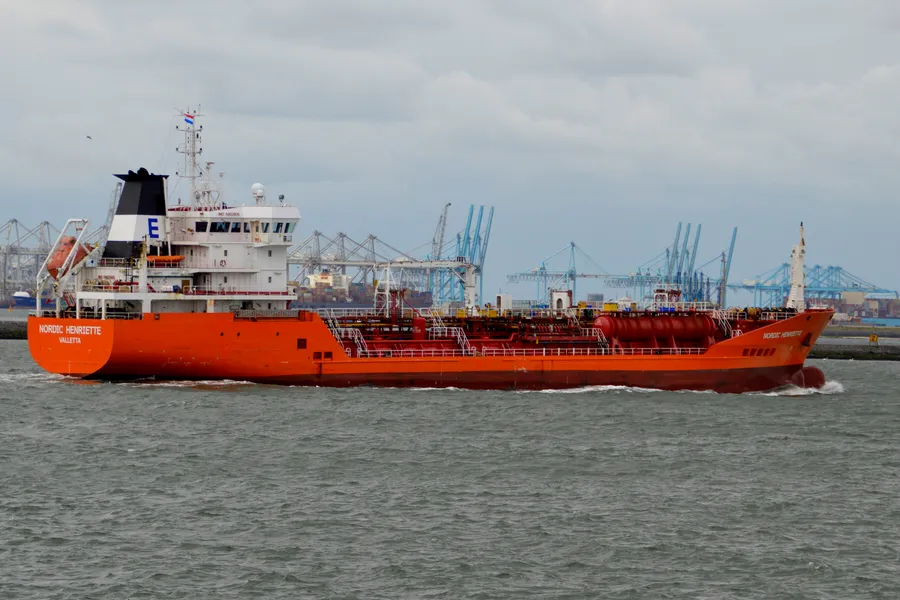
Spielvogel · CC0
- Cargo grade and specification, including API gravity and sulphur where relevant, with the dangerous goods classification where it applies
- Quantity with tolerance, and whether the parcel can be combined with others
- Load and discharge terminals or ranges, with any draft or manifold restriction you already know about
- Laycan, and whether it is firm or indicative
- Last three cargoes, heating requirements and any vetting standard your side imposes
Tonnage we work with
- Aframax, Suezmax and VLCC
- Crude oil tonnage for regional and long-haul cargoes, subject to vetting and terminal limits
- MR product tankers
- 25,000 to 55,000 dwt, the standard unit for clean products on most trades
- LR1 and LR2
- 55,000 to 115,000 dwt for long-haul product movements between refining hubs
- Chemical tankers
- IMO II stainless and coated tonnage for chemicals, easy chemicals and vegetable oils
- Small gas carriers
- Pressurised and semi-refrigerated LPG tonnage, typically 3,500 to 20,000 cbm
Liquid bulk cargoes
- Crude oil
- Petrol, diesel and jet fuel
- Gasoil and fuel oil
- Naphtha and condensate
- Base oils and lubricants
- Chemicals in bulk
- Vegetable oils and molasses
- LPG, propane and butane
- Bitumen in heated tonnage
Questions we are asked
How is tanker freight quoted?
Crude and product voyages are usually quoted in Worldscale points against the published flat rate for the route. Chemicals, vegetable oils and smaller parcels are more often quoted per tonne or lumpsum. The demurrage rate is agreed in the charter party rather than derived from the freight, so it is settled before the vessel is fixed.
How is sanctions risk handled on energy cargoes?
Every enquiry is screened before we approach the market: the parties, the origin of the product, the route and the receiving side. We do not work cargoes connected to sanctioned jurisdictions or persons, whatever the commercial terms.
How does vessel vetting fit into a fixture?
Tanker business moves on vetting as much as on freight. We confirm SIRE inspection status and acceptability with the owner early, CDI where the parcel is chemical, and coordinate any charterer or terminal vetting requirement through the appointed parties before the fixture is concluded.
Worldwide cargo desk
Bring us the cargo and the route
Cargo, quantity, origin, destination and timing are enough to begin. We will assess the movement and respond within one business day.